Wednesday, August 24, 2011
$10 for $20 Worth of Jewelry at Francesca Fine Jewelry
$10 for $20 Worth of Jewelry at Francesca Fine Jewelry

Learning to Differentiate Between CZ Jewelry and Diamond
The huge popularity of Cubic Zirconia or CZ in short is attributable to its ability to substitute itself as a desirable substitute for the more expensive diamond itself. Most Gemologists agree that the visual characteristics of CZ match closely with that of diamond, and even trained personnel in gemology cannot differentiate them with naked eyes. For the ordinary pair of eyes with no knowledge of gemology CZ looks very similar to diamonds. A closer inspection would however reveal a marginally lesser brilliance compared to a diamond and an excess dose of fire or flash of color. Originally, the Russians are credited with the development of CZ primarily for the Russian space program. This exercise was to provide an alternative for diamonds used in optics of lasers. The refractive index, hardness and dispersion of CZ are so close to diamond making it so uncanny.
How do we differentiate CZ jewelry?
To distinguish CZ jewelry from diamonds, it is essential to employ gemological equipments such as a loupe, microscope etc. While the hardness of diamond reads 10 being the hardest material known to mankind, CZ measures between 8.5 and 9 on Mohs? hardness scale. Glass/sand measures 5 to 6 which means that dust and dirt cannot cause scratches on your CZ jewelry. CZ can however cause scratches on glass which again is good news for your CZ jewelry because it provides resistance to chipping.
Weight
When it comes to weight, the CZ is a heavy weight counterpart compared to diamonds with a typical comparison notching upto 175% in weight in relation to diamond. This is again great news for CZ jewelry lovers because the weight of a similar sized diamond jewelry will be nearly half of the CZ jewelry.
CZ is colorless and flawless
While diamonds tend to carry impurities or some kind of defects, CZ is generally flawless. When we consider, colorless diamonds are among the rarest and most diamonds will have brown or yellow tinge. CZ on the contrary can be manufactured to be colorless comparable to ?D? on a color grading for diamonds.
Other factors
Identification of gems through visual inspection, in most cases is more a wild guess work than a scientific authentication. Even qualified gemologists need to be employ gemological equipment to precisely test and verify the quality of gems. The CZ while being inexpensive and durable is close to diamonds in sheen and appearance and can be sourced in any rainbow colors making them more appealing. A number of attempts to get jewelers inspect CZ with naked eyes to differentiate from diamonds have seldom been conclusive. Visual inspection was inadequate to determine the difference which asserts the value of CZ jewelry.
Everybody knows that diamonds are natural and expensive while CZ is an artificial product with qualities that are close match to real diamonds, particularly when they are employed in jewelry. The lower price at which CZ jewelry is available to customers around the world is perhaps denying CZ its due place in the jewelry
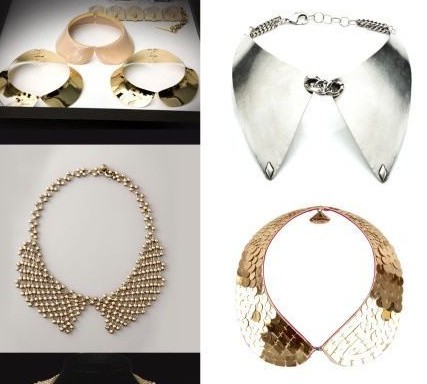
1970s Crochet Jewelry Jewellery Chokers Necklace 12 designs Vintage Pattern

1970s Crochet Jewelry Jewellery Chokers Necklace 12 designs Vintage Pattern
my jewelry modelmaking class...
Kinda just woke up and done with breakfast.... just remembered las night's session in my jewelry modelmaking class... (cont)

CAN YOU REALLY TELL IF SOMETHING IS AUTHENTIC BY LOOKING AT THE PICTURE?
To be perfectly blunt, the only way to be absolutely 100% sure that a piece of jewelry is authentic is to buy from a reputable dealer (and there are a number of great ones on ebay!). There are societies like the Antique Tribal Arts Dealer Association (ATADA) that require their members hold to the highest standards. If someone has educational information in their listing, they probably want you as a buyer to be well informed, and therefore are not afraid of informed buyers. But there are things you can look for in a piece of jewelry. If you are lucky the piece will be signed by the Zuni or Navajo artist and will be readily identifiable. Get some of the books below and familiarize yourself with Zuni versus Navajo last names. If the piece is marked Begay or Yazzi, it ain't Zuni. If the piece is not marked, look for tight bezels and well-formed and smooth silverwork. Hand stamping and file work can be precise, but is not always utterly uniform, like it would be if a machine stamped it. A handmade bezel, for holding a stone, usually doesn't have perfectly triangular sharp uniform teeth. It is very hard to tell from a picture if a piece of turquoise is good, but if it looks plastic-like or the matrix looks too uniform and perfect, it may be block or faux. Many of the old Fred Harvey pieces do not have real turquoise, which does not make them any less collectible. In general Zuni people do the best inlay and the Navajo are known for their superb silverwork, but of course there are exceptions. I have seen both Zuni and Navajo turquoise cluster work, and even snake eyes row work. Also I have seen Navajo inlaid knifewing or rainbowman kachinas, which are more typically made by Zuni artists. Big heavy silverwork is usually Navajo. Also there are collaborations between Zuni and Navajo artists, C. G. Wallace brought Navajo silverwork by Roger Skeet or John Hoxie to be inlaid by Zuni artists Leekya Deyuse or Lambert Homer, and even now Zunis will be asked to do the inlay for a Navajo silverwork piece. One thing to watch for is the use of the term Old or Dead Pawn. Pawn has a specific meaning, Native people essentially borrow money against a valuable piece of jewelry, which is then held in a pawn vault as secure as any bank. Later they repay the loan and get their piece back. Sadly, sometimes they don't ever have the money to get their jewelry back, and so after a designated amount of time the pawn becomes dead, i.e. sellable to anyone. A lot of people think that if a piece they are selling looks old it must be old or dead pawn. Collectors feel that old pawn is some of the highest quality jewelry, as it was intended for use of the artist and his/her family rather than tourists, so many people mark their listings as pawn whether or not they actually did get it from a shop that deals in bona fide pawn. Personally I only mark my pieces pawn if I got them from a pawn trading post. Of course there are still plenty of high quality older pieces that are not directly from pawn shops. The best general advice I have for you is to get some of the books listed below and spend a lot of time looking at pictures! And remember even ethical sellers sometimes make mistakes.
Subscribe to:
Posts (Atom)